

November 04, 2026
How to prepare for the end of your tenancy
Are you planning to move out soon? Follow these practical steps to get everything in order, protect your deposit, and leave on good terms with your landlord.
- Renting
View Article

November 10, 2026
Yet one measure that matters a great deal to any investor has quietly moved in their favour. Rental yields across prime London are now at their strongest level since 2009.
The reason is straightforward. Rents have continued to edge upwards, while property values in many central neighbourhoods have softened. When the income a home produces rises and the price of buying it falls, the return on that investment improves. After a long period in which central London was regarded as a market for capital growth rather than income, the balance has shifted noticeably.
Rental growth in Prime Central London picked up over the summer, with the third quarter of the year recording some of the strongest increases seen in two years. Growth remains well below the extraordinary surge that followed the pandemic, when rents in some areas rose by double digits in a single year, but it is positive, steady and supported by a shortage of good homes to let.
That shortage is partly a result of landlord caution. Many owners have been weighing up the impact of the Renters' Rights Act, which covers lettings up to £100,000 a year, alongside higher taxes on rental income and increased borrowing costs. Some have held back from letting, and a smaller number have sold. The result is that supply has been constrained, particularly at the more accessible end of the prime market, which in turn has helped to support rents.
A yield is simply the annual rent expressed as a percentage of the property's value. It is one of the clearest ways to compare the income a property produces with what it would cost to buy, and to set that return against other investments.
Taking a simple illustration, a two-bedroom flat in Chelsea worth £1.2 million and let at £1,100 a week would produce around £57,000 a year in gross rent, a gross yield of nearly 5%. A few years ago, when values were higher and rents lower, the same calculation would have produced a noticeably weaker figure. Smaller flats tend to offer the highest yields of all, as they combine strong tenant demand with lower purchase prices, and yields on many one-bedroom apartments in central London are now comfortably above the market average.
For landlords who have been considering selling, stronger yields are an important part of the calculation. With sales prices still adjusting, selling now may mean accepting less than an owner had hoped for. Letting, by contrast, is producing a healthier income than it has for many years, and allows owners to hold on to a valuable asset until market conditions improve.
It is also worth remembering that short-term letting has become a less attractive option for many owners, as rules have tightened and costs have risen. For a well-located property in good condition, a conventional long-term let to a reliable tenant now offers a combination of income and security that compares well with the alternatives.
For those considering buying a rental property in Prime Central London, the current market offers an unusual opportunity. Purchase prices remain below their previous peaks, giving buyers room to negotiate, while rents are firm and demand from tenants remains strong. An investor buying today is effectively securing a higher starting yield than at any point in well over a decade, with the potential for capital growth when the sales market recovers.
As always, the numbers need to be looked at carefully. Gross yield is only the starting point, and service charges, ground rent, management fees, insurance, maintenance and tax all affect the final return. Mortgage costs, too, remain higher than in recent years. But for buyers with significant equity or those purchasing in cash, the case for a well-chosen rental property has rarely looked stronger.
Stronger yields do not mean landlords can set any rent they choose. Tenants in central London remain conscious of affordability, and many are close to the limit of what they are prepared to pay. Landlords who price realistically and focus on securing a good tenant quickly generally achieve better results than those who hold out for a higher figure and risk a costly void period.
The homes that let best continue to be those that are well presented, sensibly priced and in good condition, with features tenants value, such as outside space, a home office, good transport links and high-quality finishes.
The past few years have asked a great deal of landlords, and the regulatory and tax environment remains demanding. But the rise in yields to their highest level in seventeen years is a genuinely encouraging development. For owners who are prepared to take a long-term view, Prime Central London once again offers a rental return that makes a compelling case for staying in the market.
Property Valuation
Book your free market appraisal today
Other news that might interest you
November 04, 2026
Are you planning to move out soon? Follow these practical steps to get everything in order, protect your deposit, and leave on good terms with your landlord.

October 28, 2026
For much of the past year, the story of London's sales market has been one of patience.

October 28, 2026
Few subjects have caused more anxiety among property owners this year than the prospect of a sharp rise in capital gains tax.

October 28, 2026
Every year, UBS assesses the world's major housing markets to judge which are most at risk of a property bubble.

October 22, 2026
Spend time on a few key measures to weather-proof the building against heavy rain and freezing temperatures – and reduce the need for costly repairs later on.

October 22, 2026
Are you looking for a new home? Here are six of our most enticing rental properties across London, the country and the coast.

October 13, 2026
For many landlords, the annual tax return has long been a once-a-year exercise: gather the statements, pass them to an accountant and think no more about it until the following January.

October 13, 2026
For much of the past decade, one of the most common conversations among landlords has not been about rents or tenants, but about structure.

October 13, 2026
Prime London's lettings market has taken on a slightly unusual shape this autumn.
October 15, 2026
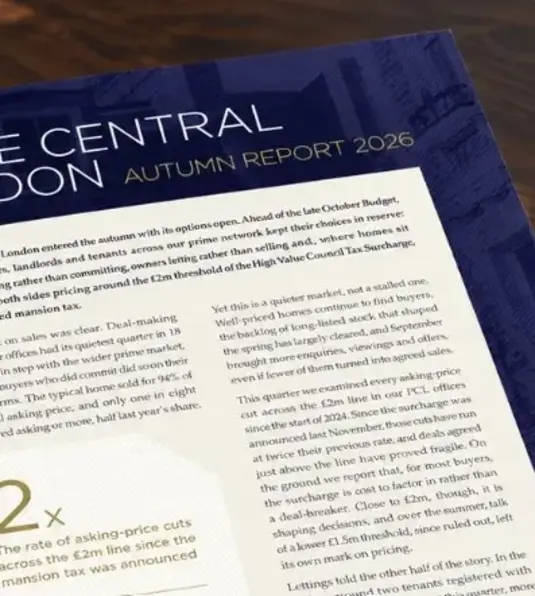
From the mansion tax line to a market renting for now, our latest Prime Central London report draws on internal data and expert insight to unpack the market in Q3.

July 29, 2026
From the cost of waiting to a breakdown of who's buying, our latest Prime Central London report draws on internal data and expert local insight to unpack the market in Q2.
April 23, 2026
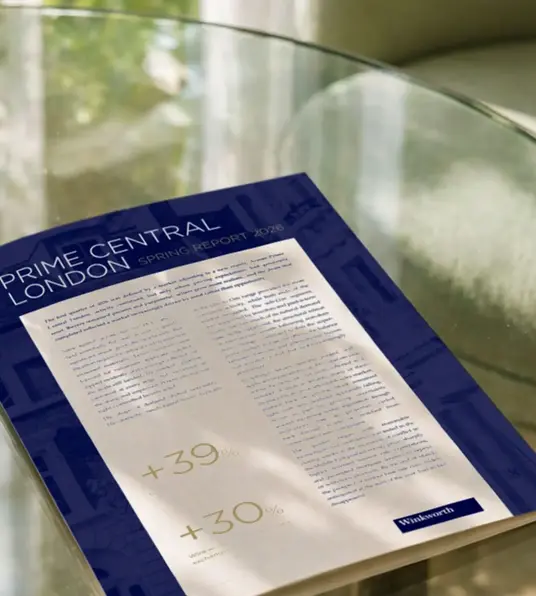
From brutal pricing to resilient tenant demand, our latest Prime Central London report draws on internal data and expert insight to unpack the market in Q1.

January 30, 2026
From pricing realism to policy clarity, our Full Year 2025 Review draws on internal data and expert insight to unpack a year of recalibration across Prime Central London.
November 05, 2025
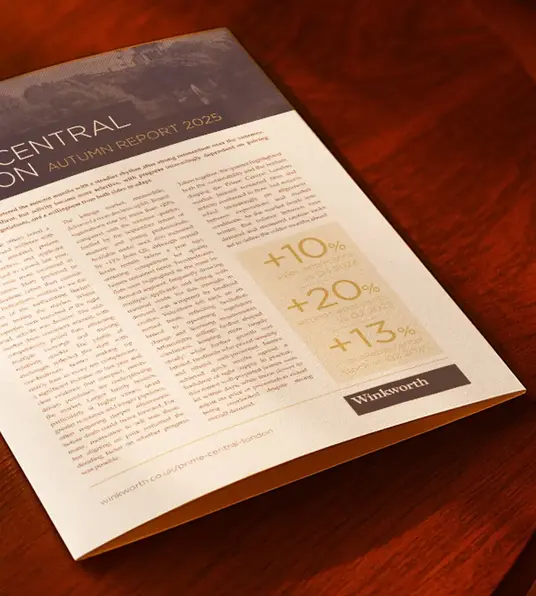
From realistic pricing to resilient rental demand, our latest Prime Central London report draws on internal data and expert insight to unpack the market in Q3.
June 30, 2025
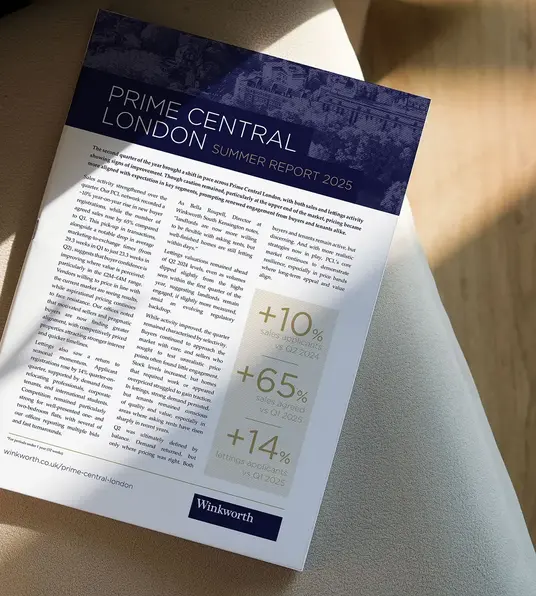
From sales momentum to shifting rental trends, our latest Prime Central London report combines internal data with expert insight from across our office network to explore the market in Q2.
April 14, 2025
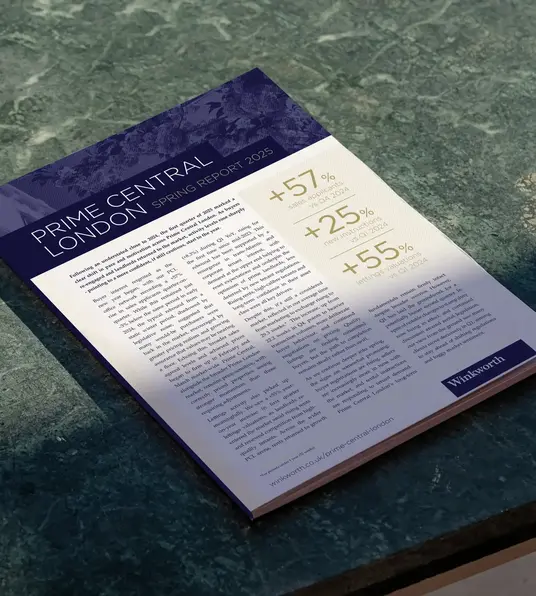
From marketwide trends to postcode-level insights, we bring together data and ground level commentary from experts within our PCL office network to look at the market in Q1 2025.