
Luxury property has traditionally been judged by fairly familiar measures. Address, architecture, proportions, outlook and finish all matter, particularly in Prime Central London. Increasingly, though, another consideration is entering the conversation: how easy is the property to own?
The growth of branded residences provides an interesting illustration. Globally, the sector has expanded dramatically over the past decade and is forecast to exceed 300,000 homes by 2031. London currently has 30 branded residential schemes, placing it among the world's leading cities for this type of development.
The numbers are striking, but the more interesting story for Prime Central London is what sits behind them. Buyers are not simply purchasing a name attached to a building. Many are looking for security, convenience, service and a home that requires relatively little attention when they are elsewhere.
The meaning of luxury is changing
For some purchasers, luxury once meant owning more. More rooms, more land, more possessions and perhaps several cars outside the front door.
For today's internationally mobile buyer, luxury can just as easily mean having less to manage.
A beautifully finished apartment that can be locked up and left for several weeks may be more appealing than a larger property requiring constant attention. A concierge who can receive deliveries, good building security and somebody available to deal with maintenance can have genuine practical value.
This helps explain some of the appeal of branded residences, where hotel-style services and management are often integral to the proposition. But the principle extends well beyond branded developments. A well-run traditional apartment building can satisfy many of the same requirements without having a luxury marque attached to the entrance.
London's international buyers use their homes differently
One reason this matters particularly in Prime Central London is that a London property may be only one part of an owner's life.
The source research suggests that the average residential portfolio among ultra-high-net-worth individuals has grown from 2.9 to 3.8 properties in less than a decade. For somebody dividing their time between several cities or countries, the requirements of each home can be very different from those of a permanent family residence.
A London base may need to work immediately whenever its owner arrives. There may be little appetite for managing contractors, organising maintenance or spending months refurbishing before the property can be enjoyed.
That can make turnkey condition particularly attractive. Buyers may still appreciate period architecture and individuality, but increasingly they can want those qualities without inheriting a complicated project alongside them.
Service has become part of the property
This is where branded residences have helped change expectations.
Globally, hotel groups still account for the majority of branded residential developments, although the market is becoming more diverse. Fashion, design and automotive names are increasingly appearing too, with non-hotel brands expected to represent a growing share of future schemes.
The name itself will appeal to some purchasers, but arguably the more lasting influence is the service model behind it.
A buyer accustomed to high levels of hospitality elsewhere in their life may reasonably expect their home to offer some of the same convenience. Security, concierge services, property management, housekeeping and other facilities can reduce the amount of time an owner needs to spend looking after the practical side of a property.
That creates an interesting comparison with London's established prime housing stock. A period apartment cannot become a hotel residence, nor should it try to. But buildings that are well managed, secure and maintained to a high standard may increasingly stand out when buyers compare their options.
Character still has considerable value
There is an obvious counterpoint. Prime Central London owes much of its appeal to homes that cannot easily be replicated.
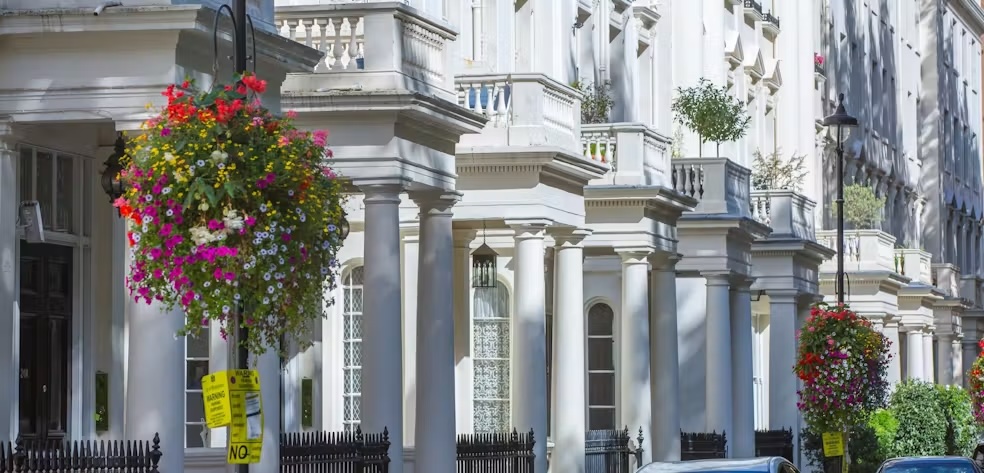
The architecture of Chelsea, Kensington, Notting Hill, Knightsbridge and surrounding neighbourhoods is part of what draws buyers to them. Stucco-fronted terraces, mansion blocks, garden squares and individual houses offer history and character that a new development may struggle to reproduce.
For many purchasers, that will remain more important than having an extensive list of amenities.
The choice is therefore not necessarily between traditional PCL property and branded residences. Instead, the growth of serviced developments may gradually influence what buyers expect from both. Period character coupled with excellent management, security and a beautifully finished interior can offer a compelling combination.
London is competing with more than other cities
There is another interesting development within the global figures. Branded residences are increasingly being built outside the traditional major cities, with coastal, island and mountain destinations taking a larger share of the market.
That matters because an international purchaser considering a London home is not necessarily comparing it only with Paris or New York. The same capital might also purchase a high-quality residence in a lifestyle destination elsewhere in the world.
London continues to command some of the highest luxury new-build values globally, but purchasers with multiple homes have an increasingly wide choice of where to place their money.
Prime Central London's advantage is that it offers something difficult to reproduce elsewhere: a combination of architecture, culture, education, business, restaurants, green spaces and established neighbourhoods within one relatively compact part of a global city.
The challenge is making the ownership experience match the quality of the location.
What this means for sellers
Not every PCL seller needs to compete with a branded development. In many cases, the property will appeal for completely different reasons.
What sellers can take from the trend is the increasing value buyers place on removing unnecessary complications. Good presentation, resolved maintenance issues, clear information about the building and confidence in how communal areas are managed can all make a difference.
For apartments, the quality of the block may increasingly be considered alongside the quality of the individual home. For houses, turnkey condition can be particularly attractive to purchasers who want to enjoy the property rather than immediately begin a major programme of work.
Branded residences are growing because they package many of these qualities together. Their wider influence may be to make buyers expect more of every high-value home they consider.
Prime Central London will always have properties whose architecture and address provide something no brand can manufacture. But for a growing number of buyers, genuine luxury may lie in combining that character with a home that is exceptionally easy to own.