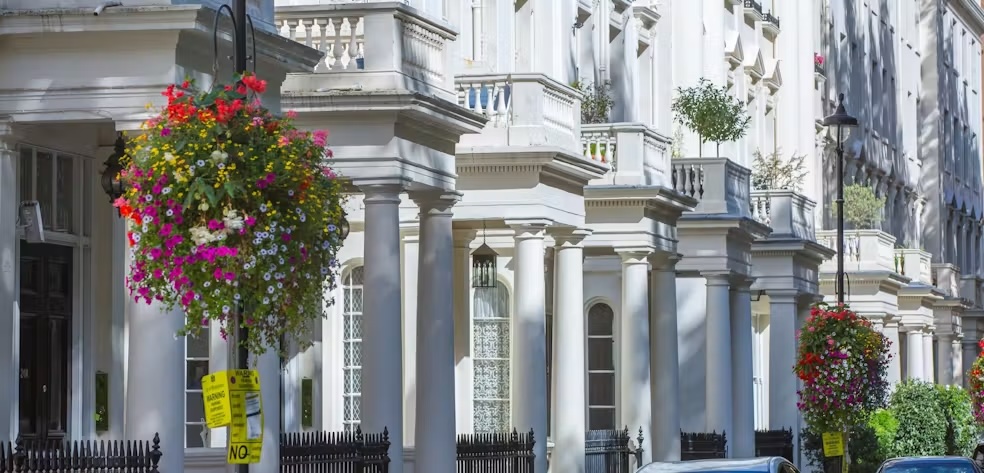

Prime Central London is often spoken about as though it behaves as a single market.
In reality, every neighbourhood tells its own story.
Rental demand in South Kensington isn't driven by exactly the same factors as demand in Marylebone. Chelsea attracts a different tenant profile from St John's Wood, while Hyde Park, Belgravia and Notting Hill each respond to their own mix of international demand, lifestyle appeal and available housing stock.
That is why looking beneath the headline figures is so valuable.
Recent neighbourhood-level data highlights an important trend. While the sales market continues to adjust at different speeds across Prime Central London, the lettings market has shown far greater consistency, with rental values continuing to edge upwards across many of the capital's most desirable postcodes.
For landlords, investors and tenants alike, it's a useful reminder that local knowledge has never mattered more.
The Sales Market Is Moving Street by Street
Average house price figures can sometimes give the impression that every part of Prime Central London is experiencing the same market conditions.
The reality is considerably more nuanced.
Over the past few months, some of the traditional prime neighbourhoods have seen modest price adjustments as buyers continue to negotiate carefully and vendors respond to a more balanced market. Other areas have remained largely unchanged, while a handful have recorded small increases in values.
This isn't unusual.
Prime Central London has always been a collection of highly individual micro-markets where local supply, buyer demand and the type of property available can all influence pricing far more than wider national trends.
It's one of the reasons experienced local advice continues to play such an important role.
Rental Performance Is Telling A Different Story
While sales values have varied from one neighbourhood to another, the lettings market has displayed much greater stability.
Rental values have continued to move upwards across both Prime Central London and the surrounding prime neighbourhoods, reflecting the steady demand that has underpinned the market throughout much of the year.
Importantly, this isn't the kind of rapid rental inflation seen immediately after the pandemic.
Instead, it reflects a market that has settled into a healthier rhythm, where demand remains strong enough to support gradual growth without creating the intense competition witnessed several years ago.
For landlords, that creates a far more sustainable environment.
Lifestyle Continues To Influence Demand
One of the interesting characteristics of Prime Central London's rental market is how differently neighbourhoods perform throughout the year.
Areas close to leading independent schools often see increased activity ahead of the academic year, while neighbourhoods popular with international professionals can experience stronger demand around corporate relocation cycles. Locations offering generous green space, excellent transport links or proximity to major business districts frequently attract different tenant profiles altogether.
These seasonal influences help explain why rental performance rarely moves in perfect unison across Prime Central London.
Rather than following a single trend, each neighbourhood responds to the lifestyle priorities of the tenants it attracts.
Understanding those local dynamics often proves more valuable than focusing solely on wider market averages.
Local Knowledge Has Become Increasingly Valuable
As markets become more balanced, broad national statistics become less useful.
Knowing that average rents across London have increased tells only part of the story.
Understanding why one neighbourhood is outperforming another, where demand is coming from and which property types are attracting the strongest interest provides a much clearer picture for both landlords and tenants.
For landlords, that knowledge can influence everything from pricing strategy to refurbishment decisions.
For tenants, it helps identify areas that best match both lifestyle requirements and long-term value.
Prime Central London Remains A Collection Of Distinct Markets
One of the strengths of Prime Central London has always been its diversity.
Chelsea, Belgravia, Kensington, Knightsbridge, Marylebone, Notting Hill and St John's Wood each possess their own character, architectural style and tenant profile. Even neighbouring streets can perform differently depending on the type of housing available and the audience they attract.
That diversity is one of the reasons the market has remained resilient over so many years.
When demand softens slightly in one location, another often experiences renewed interest, helping maintain confidence across the wider Prime Central London market.
It's a characteristic that continues to distinguish London from many other international cities.
Looking Beyond The Headlines
Large percentage movements inevitably attract attention, particularly when published alongside national house price data.
However, short-term fluctuations rarely tell the full story.
Prime Central London's property market has always evolved gradually rather than dramatically. Individual neighbourhoods move through different stages of the market cycle at different times, influenced by local supply, buyer sentiment and international demand.
The lettings market reflects that same pattern.
Some locations will outperform in any given quarter, while others pause before regaining momentum. Viewed over a longer period, however, the market continues to demonstrate the resilience that has long defined Prime Central London.
A Market Defined By Local Detail
Perhaps the most important lesson from the latest neighbourhood data is that there is no single Prime Central London story.
Every postcode has its own market dynamics, and every neighbourhood continues to attract tenants for different reasons.
For landlords, that reinforces the importance of understanding local demand rather than relying solely on wider London averages. For tenants, it highlights the value of exploring different neighbourhoods before deciding where to make their next move.
Prime Central London's strength has always been its variety.
While individual markets will continue to evolve at different speeds, the overall picture remains encouraging. Demand for high-quality homes endures, well-presented properties continue to perform strongly, and the capital's most established neighbourhoods remain among the most sought-after rental locations anywhere in the world.
In a changing market, find out how much you could let your property for?
Book your free rental market appraisal today and find out how
Winkworth can help with your rental property.